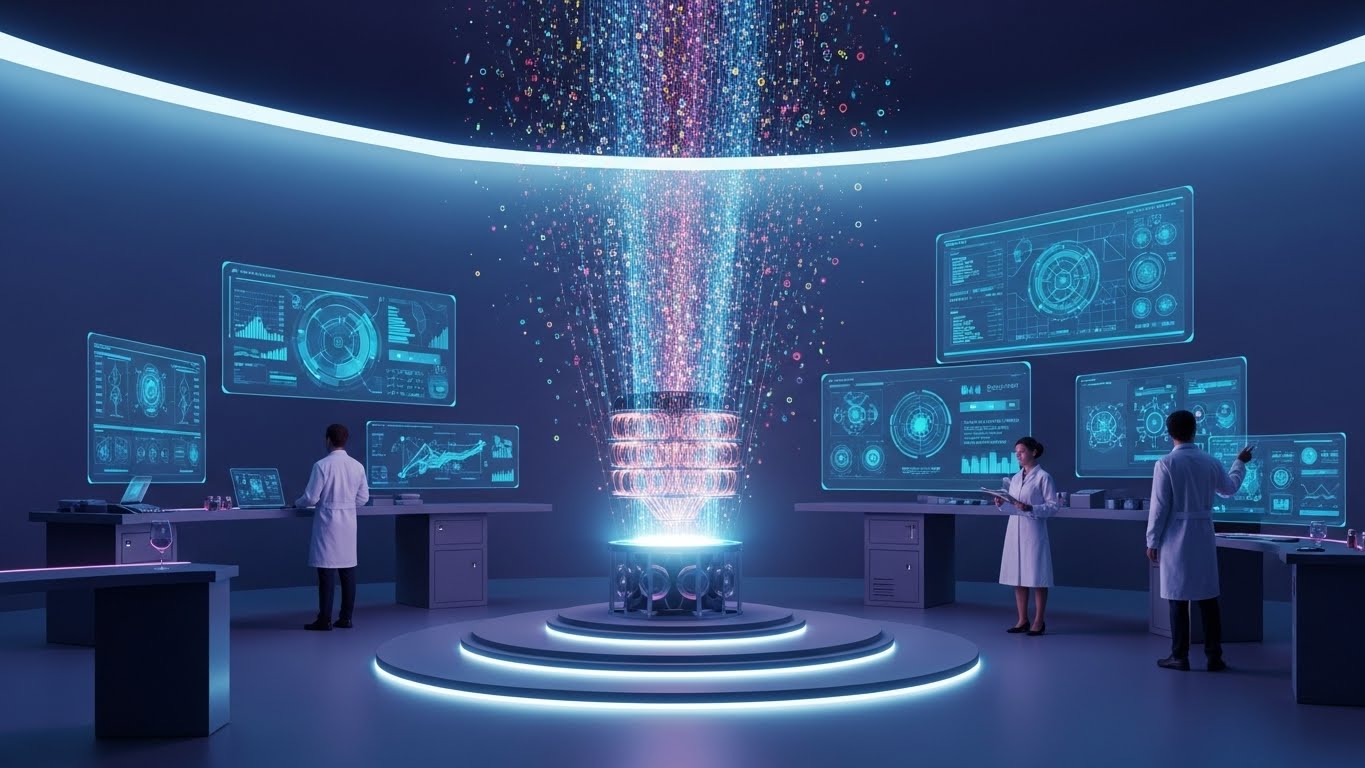
Quantum computing is no longer just a concept explored in research labs it is becoming a transformative technology with the potential to redefine computing in 2026. Unlike classical computers that use bits to process information as 0s or 1s, quantum computers use quantum bits, or qubits, which can exist in multiple states simultaneously thanks to the principles of superposition and entanglement. This unique capability allows quantum computers to perform complex calculations exponentially faster than traditional systems, opening doors to innovations in cryptography, materials science, artificial intelligence, and more.
How Quantum Computing Works 🔍
Quantum computers operate on the principles of quantum mechanics, which govern the behavior of particles at the atomic and subatomic levels. Qubits can represent both 0 and 1 simultaneously, enabling parallel computations that vastly outperform classical systems in certain tasks. Quantum entanglement allows qubits to influence each other instantly, regardless of distance, creating highly efficient computation networks. In 2026, advancements in error correction, qubit stability, and quantum algorithms are making practical quantum computing increasingly feasible.
Applications in Cryptography and Cybersecurity 🔐
One of the most impactful applications of quantum computing is in cryptography. Traditional encryption methods, such as RSA, rely on the difficulty of factoring large numbers, which quantum computers could solve rapidly. This capability poses both a risk and an opportunity. In 2026, quantum computing is driving the development of quantum-resistant encryption algorithms that secure sensitive information against future cyber threats. Governments and corporations are investing heavily in quantum-safe security to protect data in a post-quantum world.
Accelerating Scientific Research and Innovation 🔬
Quantum computing has the potential to revolutionize scientific research by solving problems that are currently impossible for classical computers. In chemistry and materials science, quantum simulations can model complex molecules and reactions with unprecedented accuracy. This allows researchers to design new drugs, develop advanced materials, and optimize chemical processes much faster. By 2026, quantum computing is accelerating breakthroughs in pharmaceuticals, energy storage, and sustainable technologies.
Impact on Artificial Intelligence and Machine Learning 🤖
Artificial intelligence and machine learning benefit significantly from quantum computing. Quantum algorithms can process massive datasets faster and more efficiently than classical computers, enhancing AI model training and optimization. In 2026, this leads to smarter predictive models, improved natural language processing, and advanced decision-making capabilities. Organizations leveraging quantum-enhanced AI gain a competitive edge by solving complex problems more rapidly and accurately.
Challenges and Limitations ⚠️
Despite its promise, quantum computing faces significant challenges. Qubits are extremely sensitive to environmental noise, which can cause errors in calculations. Maintaining qubit coherence and scaling up quantum systems remain technical hurdles. Quantum computers also require extremely low temperatures and sophisticated hardware, making them expensive and difficult to deploy widely. In 2026, researchers continue to focus on solving these challenges to make quantum computing more practical and accessible for broader applications.
Quantum Computing in Business and Industry 💼
Industries are exploring quantum computing to gain competitive advantages. Financial institutions use quantum algorithms for portfolio optimization, risk analysis, and fraud detection. Logistics and supply chain companies leverage quantum solutions to optimize routes and resource allocation. Energy and manufacturing sectors utilize quantum simulations to improve efficiency and design new products. In 2026, businesses investing in quantum computing early are positioned to benefit from faster problem-solving and innovative solutions.
Global Investment and Research 🌍
Governments, tech giants, and startups are heavily investing in quantum computing research and infrastructure. International collaborations are driving innovation in hardware, software, and quantum networks. In 2026, nations view quantum technology as a strategic priority, leading to advancements that not only boost economic competitiveness but also address global challenges such as climate modeling, drug discovery, and cybersecurity. The race to develop functional and scalable quantum computers is intensifying worldwide.
The Future of Quantum Computing 🌟
The future of quantum computing holds immense potential. As qubit stability improves and quantum networks expand, we can expect more practical applications that impact daily life, industry, and science. Hybrid quantum-classical systems are becoming a reality, allowing organizations to combine the strengths of both technologies. In 2026, quantum computing is not just a futuristic idea—it is an emerging force shaping the next generation of technological breakthroughs and problem-solving capabilities.
Conclusion: Why Quantum Computing Matters in 2026 🌐
Quantum computing represents a paradigm shift in technology. By enabling faster computation, enhanced AI, and advanced simulations, it promises to revolutionize industries ranging from healthcare to finance. While challenges remain, ongoing research, investment, and development are making quantum computing increasingly practical. In 2026, understanding and embracing quantum technology is crucial for businesses, researchers, and governments seeking to stay ahead in an era defined by rapid technological evolution and complex problem-solving.