Virtual Reality (VR) and Augmented Reality (AR) are two groundbreaking technologies that are reshaping the way we interact with digital content. While often mentioned together, VR and AR have distinct differences in how they immerse users in digital experiences. In 2026, both technologies are finding applications across gaming, education, healthcare, retail, and enterprise solutions. Understanding their unique capabilities and use cases helps individuals and businesses leverage these tools effectively.
What is Virtual Reality (VR)? 🌐
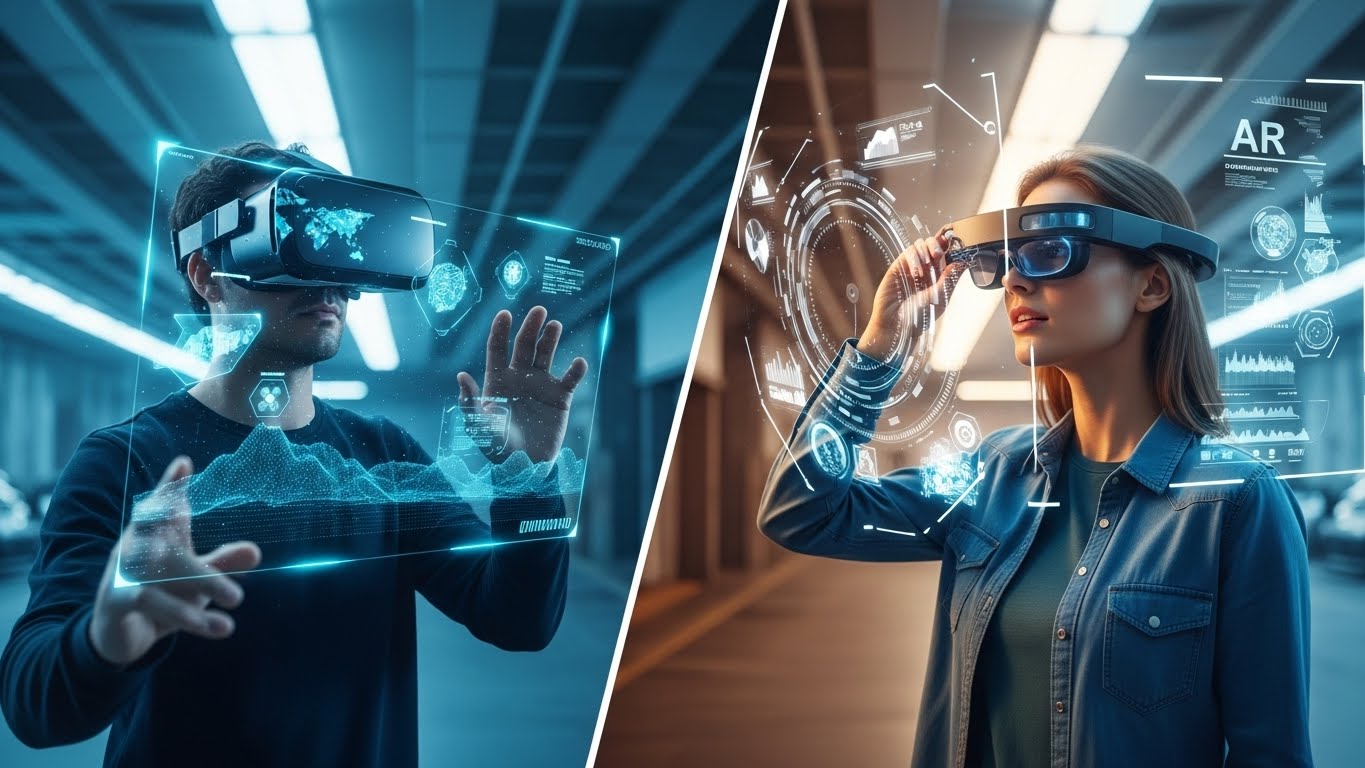
Virtual Reality is a fully immersive technology that creates a computer-generated environment in which users can interact. VR typically requires specialized headsets, motion controllers, and sometimes haptic feedback devices to simulate a realistic experience. Users are completely enclosed in the virtual environment, often unable to see the physical world around them. VR is ideal for applications where full immersion enhances the experience, such as gaming, simulations, and virtual training.
What is Augmented Reality (AR)? 🔍
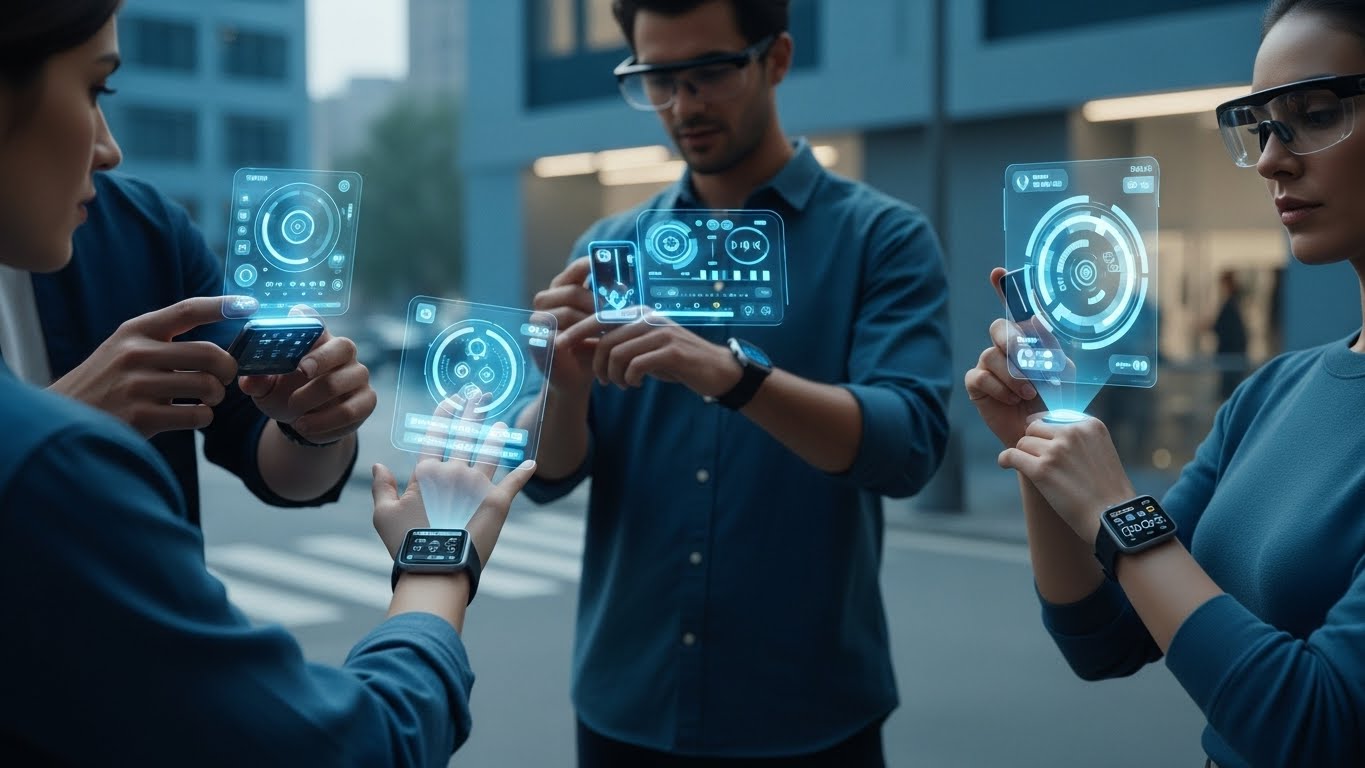
Augmented Reality overlays digital elements onto the real-world environment, enhancing perception rather than replacing it. AR can be accessed through smartphones, tablets, smart glasses, or AR-enabled devices. Unlike VR, users remain aware of their surroundings while interacting with virtual objects. In 2026, AR is used in applications like navigation, interactive shopping, remote assistance, and educational tools, providing contextual information in real-time.
Key Differences Between VR and AR ⚖️
Understanding the differences between VR and AR is crucial for choosing the right technology for specific use cases:
- Immersion: VR offers full immersion in a virtual world, while AR overlays digital content onto the real environment.
- Hardware: VR requires headsets and controllers, whereas AR can work with smartphones, tablets, or smart glasses.
- Interaction: VR environments are interactive and isolated from the real world, while AR enhances real-world interactions.
- Use Cases: VR is commonly used for gaming, simulations, and training, while AR excels in navigation, retail, and real-time assistance.
VR Use Cases in 2026 🚀
Virtual Reality has expanded beyond entertainment to practical applications in 2026. In education, VR enables immersive learning experiences, such as virtual labs, historical reenactments, and medical simulations. In healthcare, VR is used for therapy, surgical planning, and pain management. Industries like aviation and manufacturing use VR simulations to train employees safely and efficiently. The gaming sector continues to thrive, offering fully interactive and immersive experiences that transport players into entirely virtual worlds.
AR Use Cases in 2026 🌟
Augmented Reality applications are becoming increasingly integrated into everyday life. Retailers use AR to allow customers to virtually try on clothes or preview furniture in their homes. AR navigation apps provide real-time directions and contextual information. In maintenance and repair, AR guides technicians with overlays showing step-by-step instructions. AR also enhances marketing campaigns, museums, and educational tools by providing interactive, location-based content that enriches user experiences.
Benefits of VR and AR 💡
Both VR and AR offer unique advantages. VR creates fully immersive experiences, increasing engagement, retention, and realism. It is particularly effective in scenarios where hands-on practice or exploration is needed without real-world risks. AR enhances real-world interactions by providing contextual digital information, improving efficiency, convenience, and decision-making. In combination, these technologies offer powerful tools for businesses, education, healthcare, and entertainment in 2026.
Challenges and Considerations ⚠️
Despite their potential, VR and AR face challenges. VR often requires expensive hardware and dedicated space, and some users may experience motion sickness or discomfort. AR depends on device cameras and sensors, and its effectiveness can be limited by lighting and environmental conditions. Both technologies require software development, content creation, and user training to maximize value. Security and privacy considerations are also important, particularly for AR applications that collect real-world data.
The Future of VR and AR 🌐
In 2026, VR and AR continue to converge and evolve. Mixed Reality (MR) combines elements of both, enabling interactive experiences that blend real and virtual worlds. Advancements in hardware, AI integration, and 5G connectivity are making these technologies more accessible, responsive, and immersive. As development continues, VR and AR will increasingly transform education, healthcare, enterprise solutions, and entertainment, creating experiences that were previously unimaginable.
Conclusion: Choosing Between VR and AR 🌍
Virtual Reality and Augmented Reality are powerful tools with distinct purposes and advantages. VR provides complete immersion for training, gaming, and simulations, while AR enhances real-world interactions with contextual digital overlays. Understanding these differences allows individuals and organizations to select the technology best suited to their goals. In 2026, both VR and AR are shaping the future of digital experiences, offering innovative ways to learn, work, and interact with the world around us.